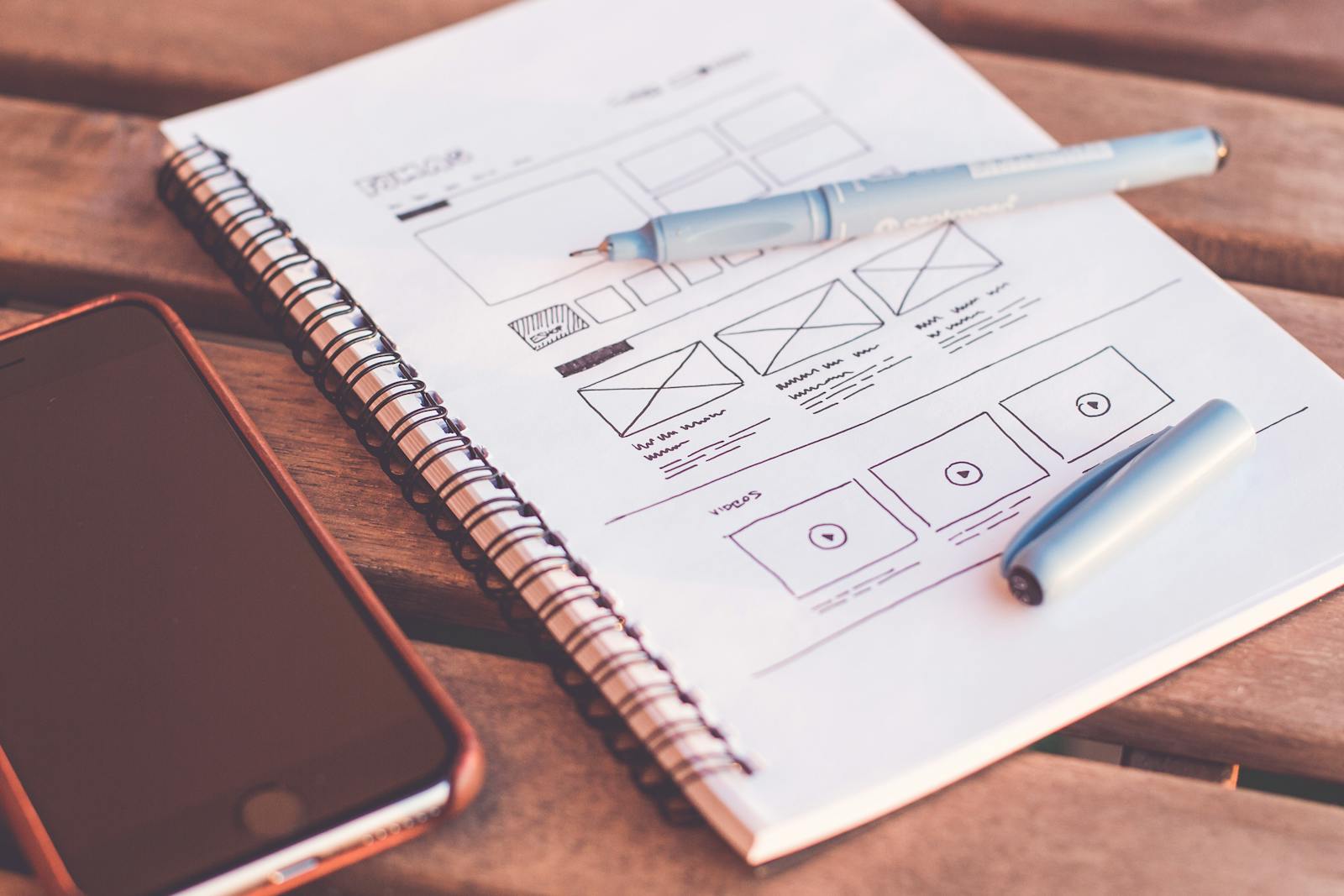
“We need a website.” It is the phrase almost every Portuguese SMB says at some point. But “website” is too generic a word — it hides important decisions about objective, budget, and strategy.
In this article we separate the two most common formats (full website vs. landing page) and explain when each makes sense for an SMB in Portugal.
Quick Definitions
Website
A set of interlinked pages (home, about, services, portfolio, blog, contact) that represents the full digital presence of the business. Optimized for organic SEO, navigation, and long-term brand authority.
Landing Page
A single page with one goal: converting the visitor into a specific action (quote request, subscription, purchase, download). Usually without a navigation menu, without external links, and highly optimized for a specific ad or campaign.
The two formats are not mutually exclusive — most mature SMBs have a website and landing pages (one per campaign).
When to Build a Full Website
A website makes sense when:
1. You Want to Rank on Google in the Medium Term
Organic SEO compounds over months and years. It requires content volume, clear hierarchical structure, an active blog, and backlinks. A landing page does not have the muscle for this.
2. You Sell Several Different Services or Products
If you offer web design, digital marketing, SEO, photography, and social media management, you cannot communicate everything on a single page without clutter. Each service deserves its own page with its own search intent.
3. Credibility Is a Decisive Factor
For a clinic, a law firm, or a B2B consultancy, the prospect will research the team, check the portfolio, read case studies, understand the process. A landing page can look shallow in this kind of context.
4. You Have a Blog or Educational Resources
A blog is an organic acquisition channel. It requires the website structure, with categories, authors, and internal links between posts.
5. A Long-Term Brand
If you are building something to last 10 years, the central digital presence is a website. Landing pages are tactical tools, not strategic ones.
When to Build Just a Landing Page
A landing page makes sense when:
1. You Are Running a Paid Traffic Campaign
Google Ads, Meta Ads, LinkedIn Ads — all perform better when pointing to a focused landing page than to a generic home. Typical conversion rate: 2-5x higher.
2. Validating a New Product or Service
Before investing €8,000 in a website, launch a landing page for €1,500 to test real demand. If it generates leads, move on to a full website. If it does not, you saved money.
3. Temporary Event or Offer
Summer workshop, black friday, webinar, product launch. It lasts 2-6 weeks. It does not make sense to integrate into the main site — a dedicated landing is cleaner.
4. Conversion Channel for Outbound
If you run LinkedIn or email outreach and want to send prospects to a specific destination, a landing page with a message aligned to the ad converts better.
5. Business With a Single Core Service
Wedding photographer, surf school, healthy meal delivery. Cases where the customer wants a very specific thing and the whole page should drive booking/hiring that thing.
Direct Comparison
| Criterion | Website | Landing Page |
|---|---|---|
| Pages | 5-20+ | 1 |
| Goal | Multiple (SEO, authority, info) | Single (conversion) |
| Time to ship | 4-10 weeks | 1-3 weeks |
| Typical PT investment | €3,500 - €15,000 | €800 - €3,000 |
| Organic SEO | Strong | Weak |
| Paid-traffic conversion rate | 1-2% | 3-10% |
| Monthly maintenance | Needs regular updates | Minimal (except A/B testing) |
| Best for | Long-term brand | Specific campaigns |
Common Mistakes in Both Decisions
Mistake 1: Website That Looks Like a Landing Page
Some SMBs build a “website” that is actually a single scroll page without real SEO and without a blog. This format neither generates organic traffic nor converts as well as a real focused landing page.
Mistake 2: Landing Page for Those Who Need a Website
Growth-stage companies that only have a landing and spend more and more on paid traffic to keep volume. Without organic authority, cost per lead rises every year.
Mistake 3: Mixing Objectives
“We want a site where you can see our work, book meetings, buy products online, read articles, and subscribe to our newsletter — all on the home.” Result: a confusing home that does nothing well.
Recommended Path for Most SMBs
- Start with a simple website of 5-7 pages (Home, About, Services, Portfolio/Cases, Blog, Contact) in Astro or Next.js
- Set up technical SEO from day 1 (see our technical SEO checklist)
- Write 4-6 foundational blog posts before launch
- When you run paid campaigns, build specific landing pages (without touching the main site)
- Measure everything — Google Analytics 4, Search Console, lead CRM
This path gives you a complete digital presence and the flexibility to grow without redoing everything two years from now.
What Each One Costs in Portugal
Rough figures for projects delivered by a professional agency in Portugal:
- Simple landing page: €800 - €1,500
- Custom design + animation landing page: €1,500 - €3,500
- Institutional website, 5-7 pages: €3,500 - €7,000
- E-commerce website: €6,000 - €20,000+
- Custom-built website (no template) with animations: €8,000 - €30,000+
For an estimate tailored to your specific case, use our quote calculator or read the article how much does a website cost in Portugal in 2026.
Conclusion
Websites and landing pages solve different problems. The correct answer depends on your business objective, time horizon, and customer acquisition strategy.
If you are still unsure which one fits you best, book a conversation. In 30 minutes we can understand your case and recommend the most economical and effective path.
For more context on hiring an agency, read how to choose a web design agency in Portugal.